
Latin America
*Overview text on this page is drawn from the UNEP report "Global Outlook on Sustainable Consumption and Production Policies: Taking action together"
Link here to the Latin American Forum that took place in Arequipa, Peru in October of 2014 - click here.
Home to 580 million people, covering about 21 billion km2 of territory, the Latin America and Caribbean (LAC) region is full of diversity and contrasts. The state of development varies among the countries in the region. While the region comprises a great majority of upper-middle-income countries, it also counts a least-developed country (LDC), Haiti, and a number of lower-middle-income countries, such as Nicaragua, Guatemala and El Salvador.
While the expansion of industrial development has brought about substantial economic growth, poverty alleviation and social progress, industrial production processes and consumption patterns have also led to an increase in environmental degradation and depletion of natural resources.
The statistics below demonstrate the pressing need to change consumption and production patterns:
conservation. Often, the same public policies that aim to foster economic growth also encourage deforestation of native forests (United Nations Department of Economic and Social Affairs, 2007). The highest rates of deforestation are found in Central America and the largest deforested land areas are in South America, mostly in the Amazon region. Deforestation rates in the region are twice as high as the global average, which is partly responsible for the region’s increase of CO2 emissions. Although greenhouse gas (GHG) emissions of the LAC region are lower than those observed in more industrially developed regions, this is a worrisome trend.
These challenges stressed the vital role that the promotion and adoption of sustainable consumption and production (SCP) patterns plays in LAC and globally. The LAC region has started to take action, adopting and implementing sub-regional and national policies on SCP, as described in the following sections.
It should be noted that Mexico presents a special case in the region, being physically a part of North and Mesoamerica, culturally similar to Meso- and Latin America, and economically and politically active in all three areas. In this regional page, Mexico will be treated as a member of the larger Latin American region, neither belonging to the Caribbean nor South American sub-regions.
While the expansion of industrial development has brought about substantial economic growth, poverty alleviation and social progress, industrial production processes and consumption patterns have also led to an increase in environmental degradation and depletion of natural resources.
The statistics below demonstrate the pressing need to change consumption and production patterns:
- Between 1970 and 2006, average electricity consumption quadrupled from 427 to 1,688 kWh per capita;
- Water demand in LAC increased by 76 per cent between 1990 and 2004 from 150 km3/yr to 264.5 km3/yr, due to population growth and increased agricultural use;
- The amount of solid waste per capita has doubled in the last 30 years;
- In 2008, LAC countries consumed 749.5 million tons of oil, which amounts to 6.6 per cent of the world’s total;
- Between 2000 and 2005, approximately 64 per cent of all global forest loss took place in LAC. However, there are some countries, like Brazil, that have already reversed deforestation rates and made a commitment to reduce deforestation by 80 per cent a year by 2020.
conservation. Often, the same public policies that aim to foster economic growth also encourage deforestation of native forests (United Nations Department of Economic and Social Affairs, 2007). The highest rates of deforestation are found in Central America and the largest deforested land areas are in South America, mostly in the Amazon region. Deforestation rates in the region are twice as high as the global average, which is partly responsible for the region’s increase of CO2 emissions. Although greenhouse gas (GHG) emissions of the LAC region are lower than those observed in more industrially developed regions, this is a worrisome trend.
These challenges stressed the vital role that the promotion and adoption of sustainable consumption and production (SCP) patterns plays in LAC and globally. The LAC region has started to take action, adopting and implementing sub-regional and national policies on SCP, as described in the following sections.
It should be noted that Mexico presents a special case in the region, being physically a part of North and Mesoamerica, culturally similar to Meso- and Latin America, and economically and politically active in all three areas. In this regional page, Mexico will be treated as a member of the larger Latin American region, neither belonging to the Caribbean nor South American sub-regions.
Sub-Regions
The Caribbean
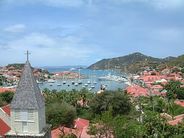
In the Caribbean, countries have identified several priority areas for SPC, such as the diversification of energy sources, food security and support to SMEs. GRF is working to engage with the Caribbean community to move forward on regional SPC initiatives. Read more... |
South America
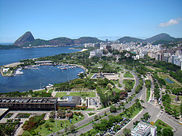
The South American sub-region has taken a number of approaches to SPC, ranging from cross-sectorial to integration within trading blocks such as Mercosur. GRF is active throughout the region, contributing research to pan-regional and country specific SPC projects. Read more... |
Regional Highlights
National Report "Institutional Strengthening of Education for Sustainable Consumption. Mapping of opportunities. Mexico. 2012"
This report provides an overview of the diverse public policies that exist in Mexico that influence national Education for Sustainable Consumption (ESC) policies. It is the result of the analysis of documents, diverse national processes, as well as interviews and dialogues with key actors. It is a document that seeks to motivate more exhaustive and participatory research, which could serve as a basis to strengthen existing public policies and to propose new policies. In this document, opportunities are envisioned for new initiatives and to strengthen or evaluate actions taken to date on ESC by different institutions, universities and civil society organizations. Download the Report Below
This report provides an overview of the diverse public policies that exist in Mexico that influence national Education for Sustainable Consumption (ESC) policies. It is the result of the analysis of documents, diverse national processes, as well as interviews and dialogues with key actors. It is a document that seeks to motivate more exhaustive and participatory research, which could serve as a basis to strengthen existing public policies and to propose new policies. In this document, opportunities are envisioned for new initiatives and to strengthen or evaluate actions taken to date on ESC by different institutions, universities and civil society organizations. Download the Report Below
Rio, June 2012
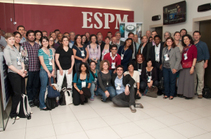
The Inaugural Global Research Forum on Sustainable Production and Consumption Conference was held from June 13-15, 2012 in Rio de Janeiro. The theme was: Global and Regional Research on Sustainable Consumption & Production: Achievements, Challenges, and Dialogues. The two and a half-day workshop was divided between a focus on the production of SPC research and its communication and application in practice. Read more...
The Inaugural Global Research Forum on Sustainable Production and Consumption Conference was held from June 13-15, 2012 in Rio de Janeiro. The theme was: Global and Regional Research on Sustainable Consumption & Production: Achievements, Challenges, and Dialogues. The two and a half-day workshop was divided between a focus on the production of SPC research and its communication and application in practice. Read more...
Papers and Case Studies

| Institutional Strengthening of Education for Sustainable Consumption. Mapping of opportunities - Mexico |
| Fortalecimiento Institucional de Educación para el Consumo Sustentable. Mapeo de oportunidades - México |